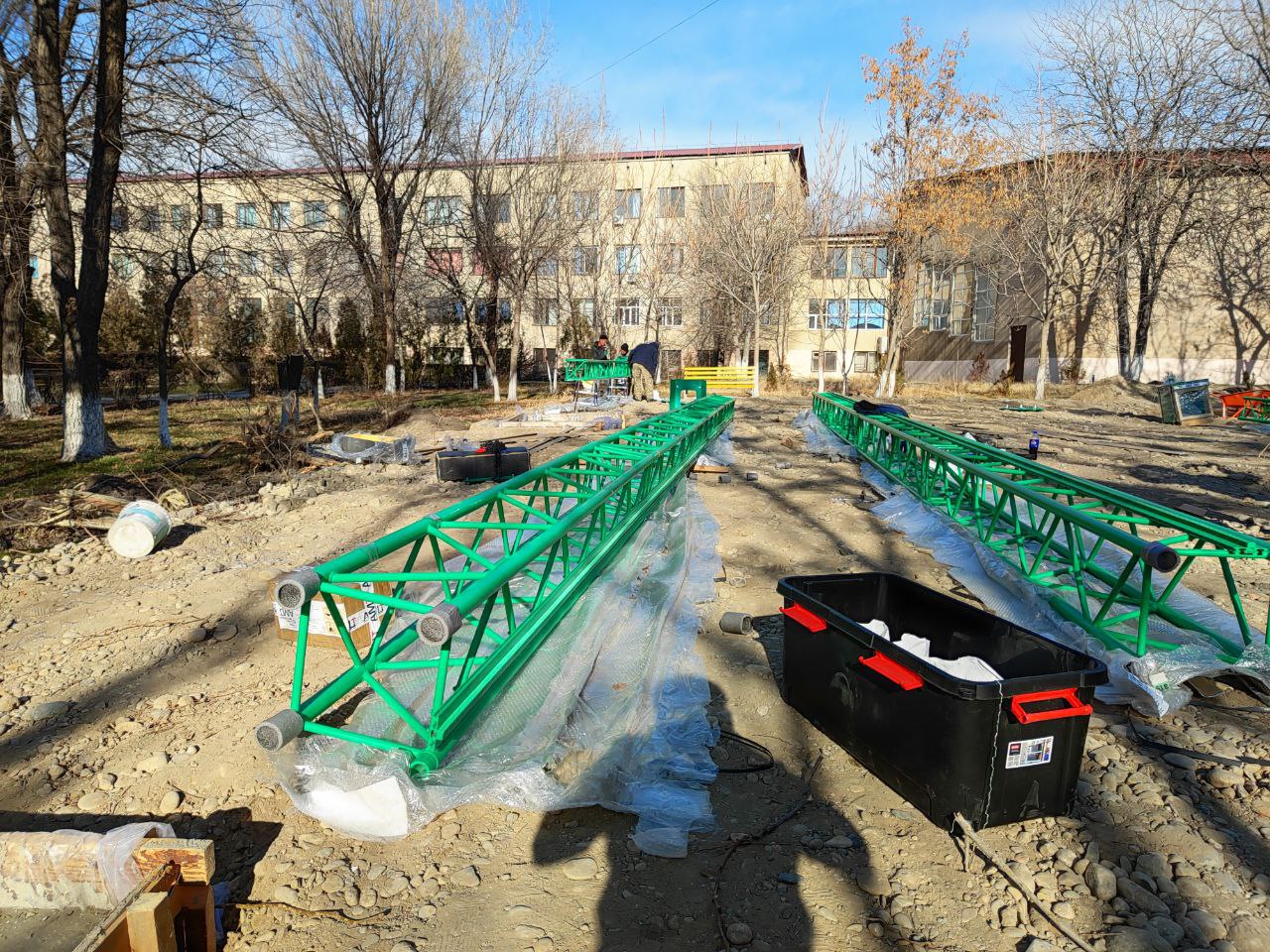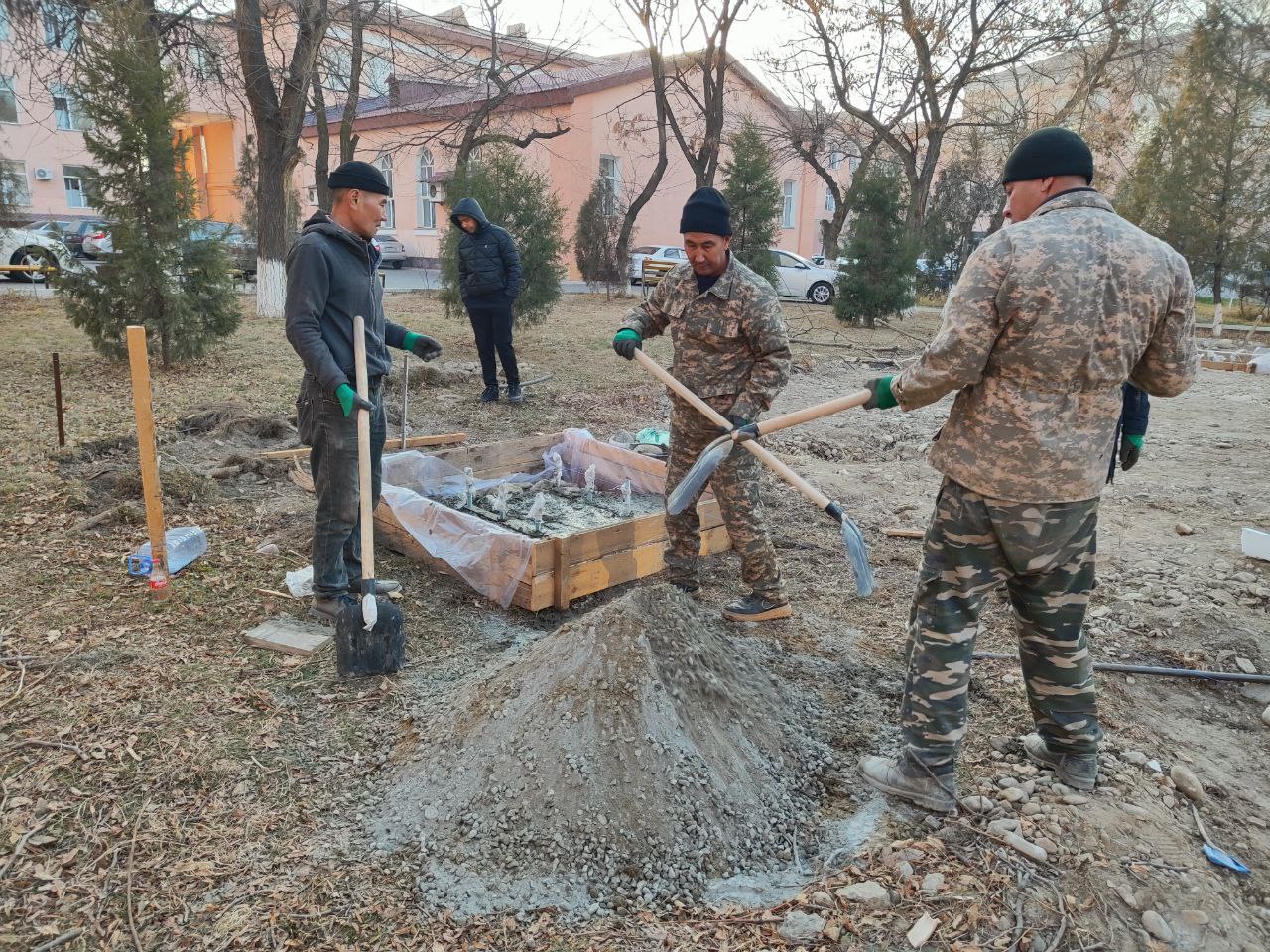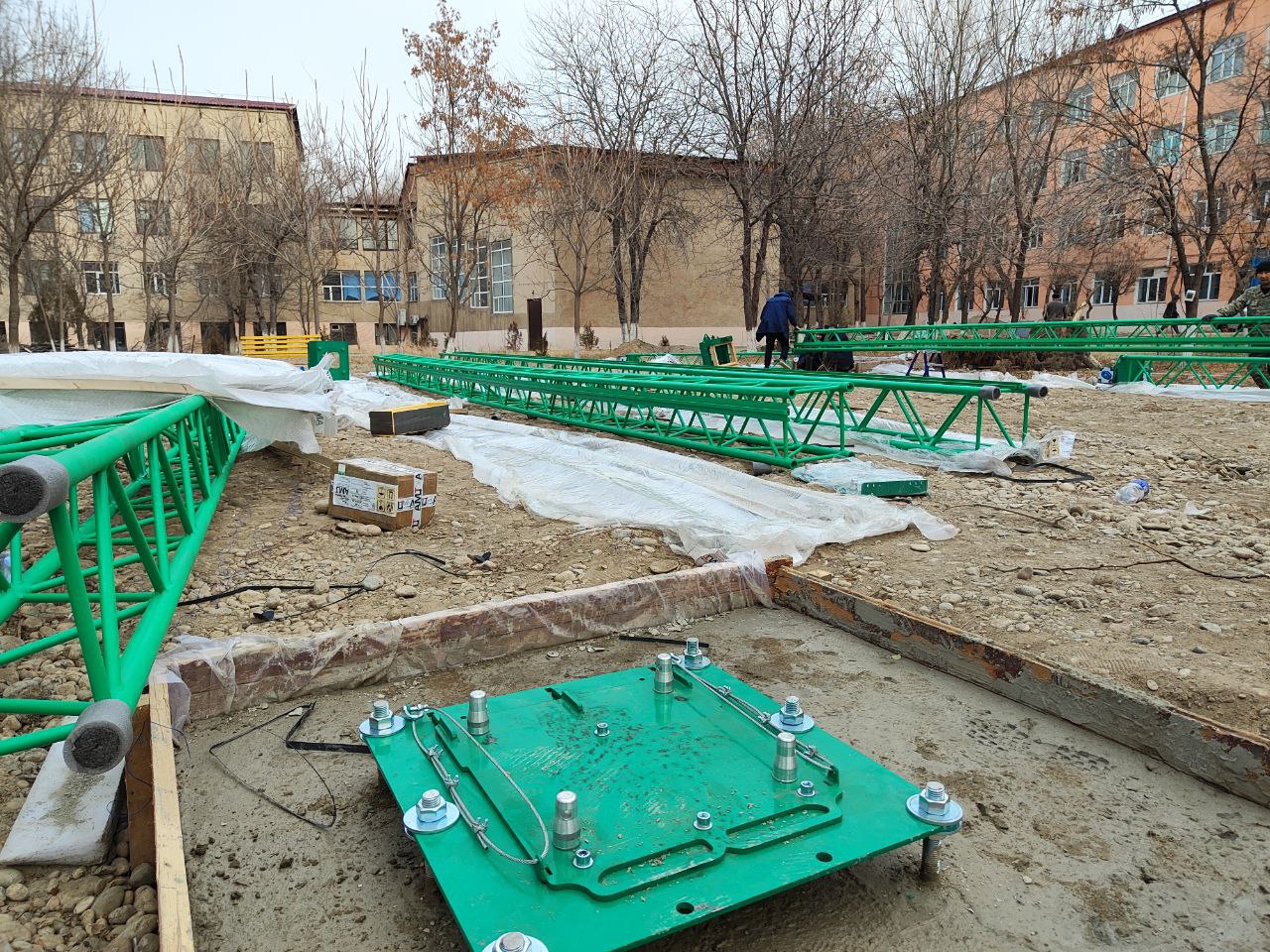

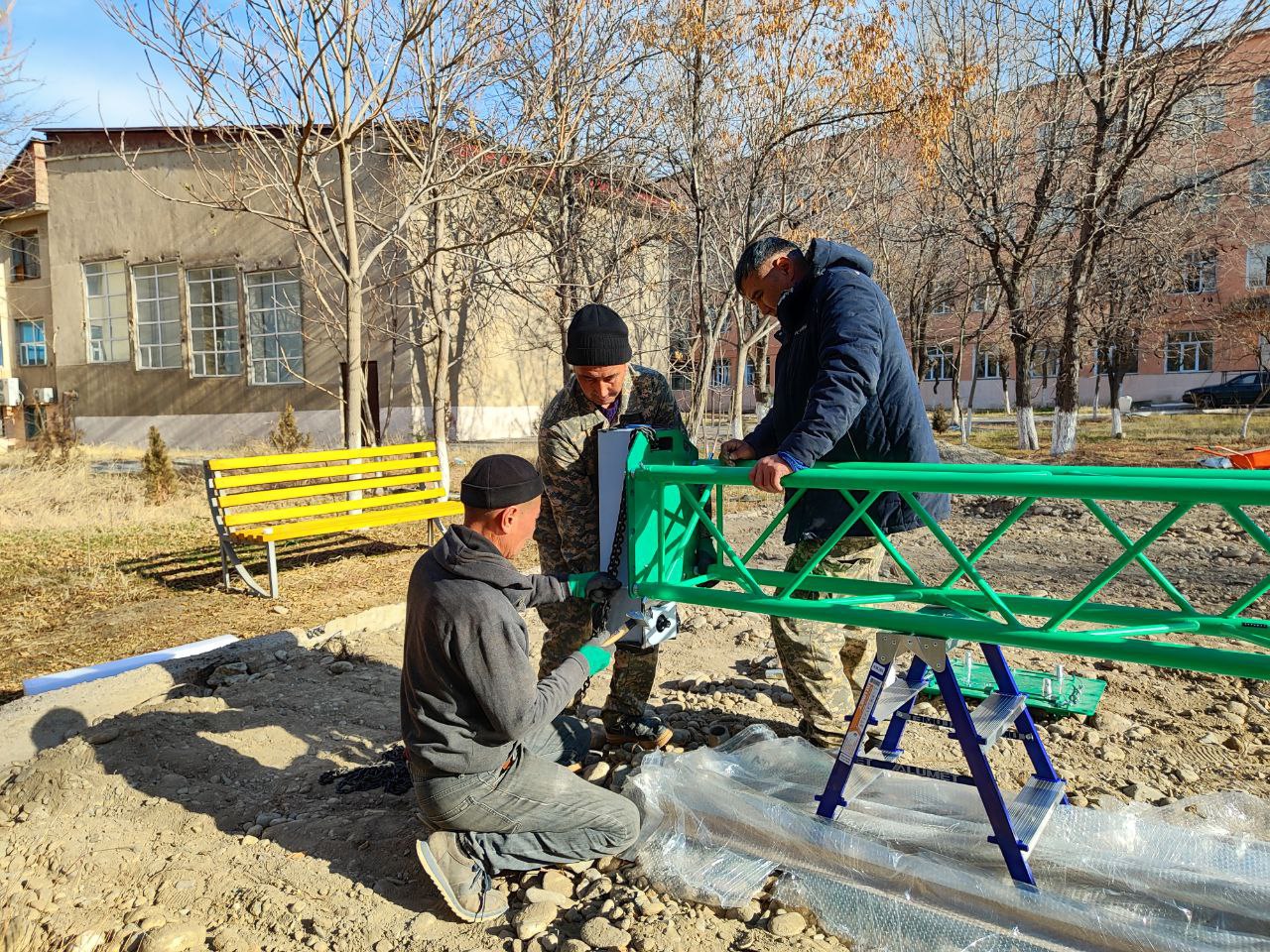
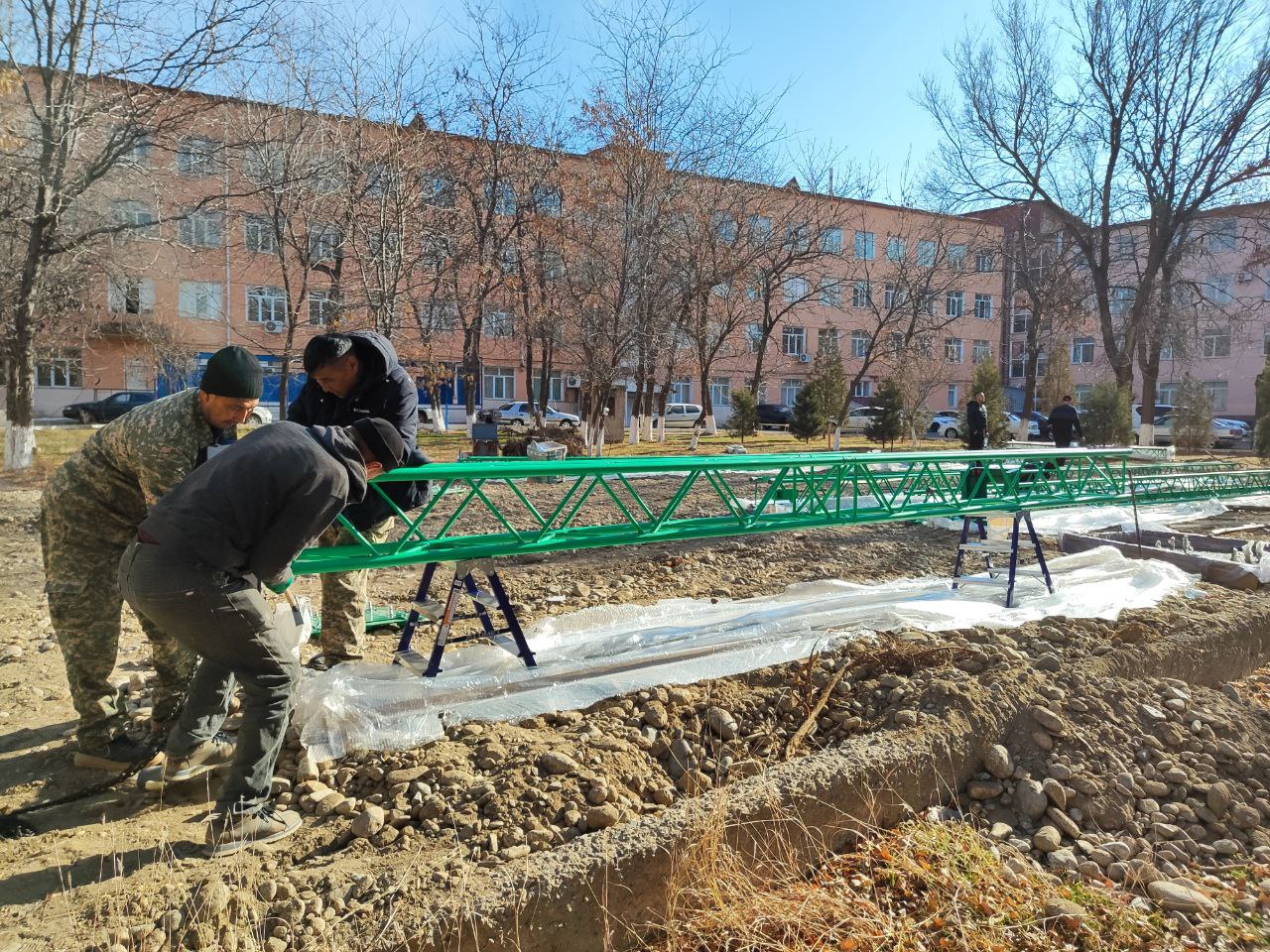
М. Х. Дулати атындағы Тараз университетінде ресейлік АМТ компаниясы шығарған S300-2 құрылыс 3D принтерін монтаждау және іске қосу-баптау жұмыстары басталды. Бұл принтер "BR24992867 - Қазақстанның су шаруашылығы мен қайта өңдеу өнеркәсібін дамыту және басқару үшін ресурс үнемдейтін технологияларды әзірлеу, инновациялық инжинирингтік орталық құру" бағдарламасы бойынша нысаналы қаржыландырудың мемлекеттік бағдарламасын іске асыру шеңберінде сатып алынды.

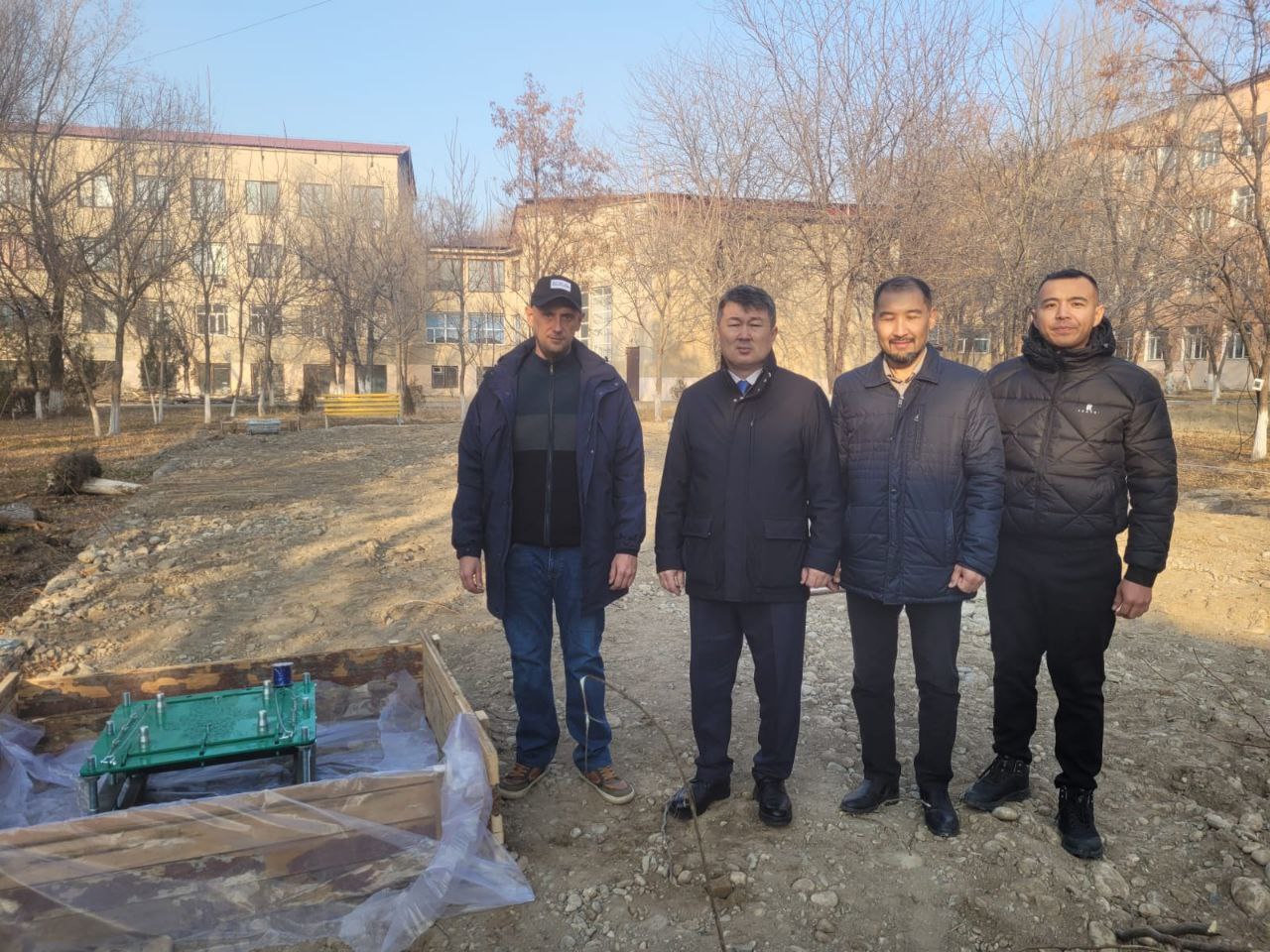
Жұмыстар Басқарма төрағасы – Ректор у.м.а. Орынбаев С.Ә. басшылығымен ресейлік 3D CDC компаниясының басшысы А.Е. Чикуновтың, "Farlow ЖШС басшысы Сулейменов К., "Ә.С. Ахметов атындағы Наноинженерлік зерттеу әдістері" ҒЗЗ ғылыми қызметкерлерінің және университеттің шаруашылық бөлімінің қызметкерлерінің қатысуымен жүргізілуде.

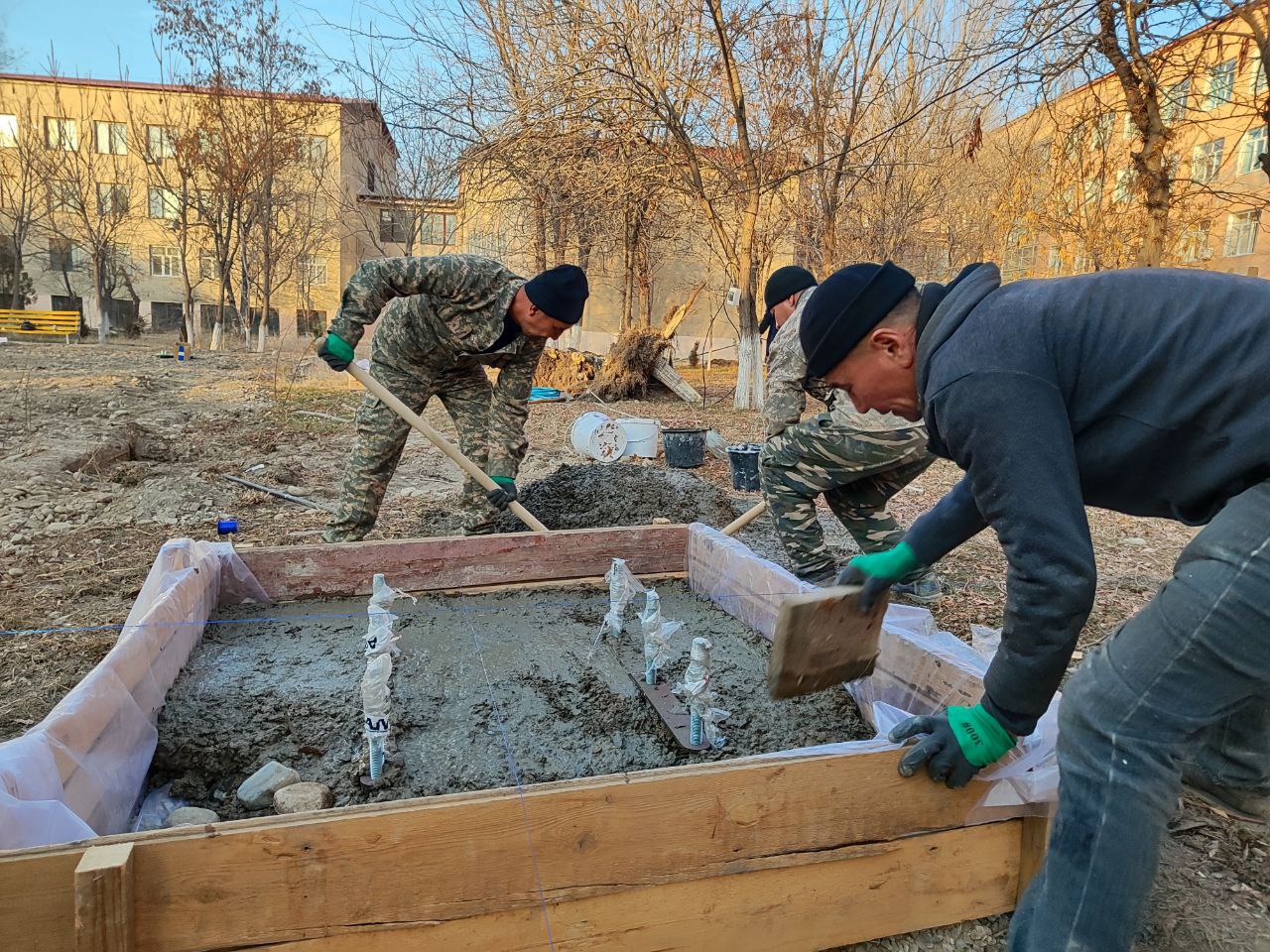
Қазіргі уақытта іргетас тіректерін орнату, рамалық элементтерді монтаждау, фермалар мен байланыстырушы блоктарды жинау жұмыстары жүргізілуде. Жұмыстарды 2025 жылдың желтоқсан айының бірінші онкүндігінде аяқтау жоспарлануда.

Айта кетейік, бұл құрылыс 3D принтері Тараз қаласы мен Жамбыл облысында іске қосылатын осындай жалғыз жабдық болып табылады.
The next stage of experimental work on testing prototypes of concrete, polymer concrete, polymer cement fiber concrete and concrete polymers was carried out at the "A.S. Akhmetov Nanoengineering Research Methods Laboratory". The experiments were conducted as part of the program "BR24992867 - Development of resource-saving technologies for the development and management of water management and processing industry in Kazakhstan, creation of an innovative engineering center." Research and development includes the following tasks of the program's calendar plan:

1) 2.5.1 Investigation of the quality of new building materials, geometric dimensions and shapes of structures;

2) 2.5.2 Investigation of the structure and physico-mechanical and operational properties of hydraulic polymer concrete;

3) 2.5.3 Development of technological parameters for obtaining polymer concrete.

The tests were conducted by Senior researchers, PhD Atenov Y.I. and Master Shanshabaev N.A. under the guidance of Leading researcher, Doctor of Technical Scienses Bekbasarov I.I.

The concrete prototypes were produced at the first stages of the research. For their testing under the action of repeatedly repeated dynamic (shock) loads, a special impact-type laboratory mechanical installation was developed and constructed (Fig. 1).

1 - U-shaped supporting frame; 2 - support part; 3 - guide rod; 4 – impactor; 5 - test sample; 6 - support plates.

Figure 1 – Laboratory installation for impact testing

The results of testing concrete samples for impact loads are shown in diagrams in Figure 2. The standard deviations of the data on the average impact strength of samples at different periods of water saturation are shown in Figure 3. Their maximum values are not higher than 0.45 kJ, which indicates the reliability of the average values of energy costs for destruction. Fragments of tests and destruction of samples are shown in Figure 4.

Figure 2 – Average total energy for initiation of sample damage, kJ

Figure 3 – Standard deviations of the data on the average impact strength of samples at different periods of water saturation at the stage of damage initiation

Figure 4 – Fragments of testing and destruction of concrete samples by impact loads: a) Initial state; b) The stage of damage initiation; c) The stage of progressive destruction; d) The stage of complete destruction.

The results of determining the values of the relative energy intensity coefficient at the stage of damage initiation of concrete samples SE, calculated by formula (1) are presented in Table 1 and Figure 5.

Sg =B o n  / B k n,

(1)

where: – impact energy for the test sample, kJ; – impact energy for the control sample, kJ; n – sample type.

Table 1 - Values ​​of the relative energy intensity coefficient at the stage of damage initiation of concrete samples

Type of concrete

Values ​​of the coefficient of relative energy intensity at the stage of damage initiation of samples  during water saturation at the

20 days

40 days

60 days

Control concrete

0.93

0.85

0.78

Polypropylene fiber concrete

0.96

0.93

0.89

Polymer cement concrete

1.0

0.86

0.80

Polymer cement concrete

1.0

0.86

0.80

Polymer cement fiber concrete

0.96

0.93

0.89

Polymer cement fiber concrete

0.96

0.93

0.89

Concrete polymer

0.93

0.86

0.80


Fig. 5 - Dependence of the coefficient of relative energy intensity at the stage of damage initiation of concrete samples  on the duration of water saturation

The graphs shown in Fig. 6 are described by the following linear function


(2)

where: k and o are the parameters taken from Table 11 depending on the type of concrete; t is the duration of water saturation of concrete, days.

Table 2 - Values ​​of parameters k and o in formula (2).

Designation of samples

Parameter values

Approximation index R2

k

o

K

0.0037

1.0033

0.9985

FC

0.0018

0.9967

0.9932

FMR

0.005

1.0867

0.9494

FPP

0.005

1.0867

0.9494

FPCMR

0.0018

0.9967

0.9932

FPCPP

0.0018

0.9967

0.9932

Ke

0.0032

0.9933

0.998

The analysis of the test results at the stage of damage initiation of concrete samples, presented in Fig. 11 and Table 10, allows us to draw the following conclusions:

- the resistance to destruction under impact loads of polymer concrete is, on average, 1.07-2.35 times higher than that of the control concrete;

- the impact resistance of polymer concrete treated with polyester resin PN-609-21M (Ke), as well as polymer cement concrete with additives Polyplast SP-1 (FPP) and MasterRHEOBUILD 1033 (FMR) is 1.07-1.09 times higher compared to control concrete (K);

- polymer-cement fiber-reinforced concretes with additives MasterRHEOBUILD 1033 (FPCMR) and Polyplast SP-1 (FPCPP), as well as polypropylene fiber-reinforced concretes (FC) are characterized by 2.06-2.35 times higher impact resistance compared to control concrete samples (K);

- with an increase in the water saturation period of the samples from 20, 40, and 60 days, a decrease in the impact resistance of the samples by 4-7%, 7-15%, and 11-22%, respectively;

- with a water saturation period of 20, 40, and 60 days, the impact strength decreased: for samples FC, FPCMR and FPCPP– by 4, 7, and 11%, respectively; for Kesamples – by 7, 14, and 20%; and for samples FMR and FPP, a decrease in the desired characteristic of 14 and 20% was observed at 40 and 60 days of water saturation of the samples.

It is known that the introduction of scientific research results into production activities begins with the combined efforts of scientists and industrial specialists. One of these events was organized at the M.Kh. Dulaty Taraz University, which brought together scientists and specialists from the construction industry to discuss common problems.

In particular, from July 21 to August 7, 2025, short-term training courses were held at the M.Kh. Dulaty Taraz University for specialists from industrial enterprises, government agencies and design and survey organizations in the construction sector of the Zhambyl region and the Taraz city. Among the course participants were specialists from the Department of Architecture and Urban Planning of the Zhambyl region administration, experts from the Scientific Research Institute of the SKB of KazNIISA JSC, teachers from the Kazakh National University of Water Management and Irrigation, representatives of design institutions "Expertise of Earthquake-resistant Construction", "StroyTechExpertiza", "StroySnabTechMontazh", "Qaztehnadzor-ALI", specialists from the Gimarat Temirbeton plant, managers and engineering and technical staff of Binom production enterprises, etc. The university's scientists - Bekbasarov I.I., Sagyndykov A.A., Nurpeisov S.K., Bayalieva G.M., Karabaev N.T., Shanshabaev N.A., Atenov Y.I. – contributed to the organization of the course. The acting rector of the University Kabdushev A.A. shared the achievements of university science, familiarized with the university's plans for the prospects of scientific research.

The course was organized and conducted within the framework of the scientific program BR24992867 "Development of resource-saving technologies for the development and management of water management and processing industry in Kazakhstan, creation of an innovative engineering center" implemented at the University. Within the framework of this scientific program, carried out on a grant basis through a competition for program-specific financing, scientists and specialists of the university acquainted the course participants with the results of research on polycomponent concretes and structures made from them. During the training, the intermediate results of experimental research were presented. New knowledge on advanced building materials and structures was presented to industrial specialists. Formulations and technological lines of building materials made on the basis of composite mixtures and improvers were presented. New materials and technologies in the industry, formulations and mixtures, methods and techniques, constructive solutions, etc. were discussed.

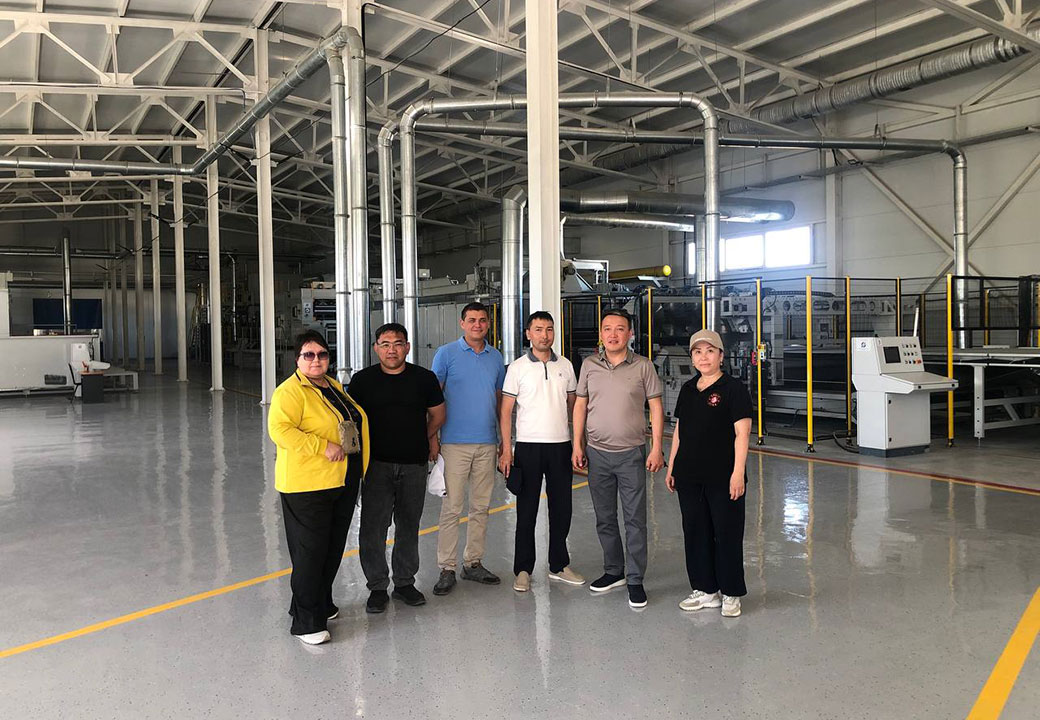
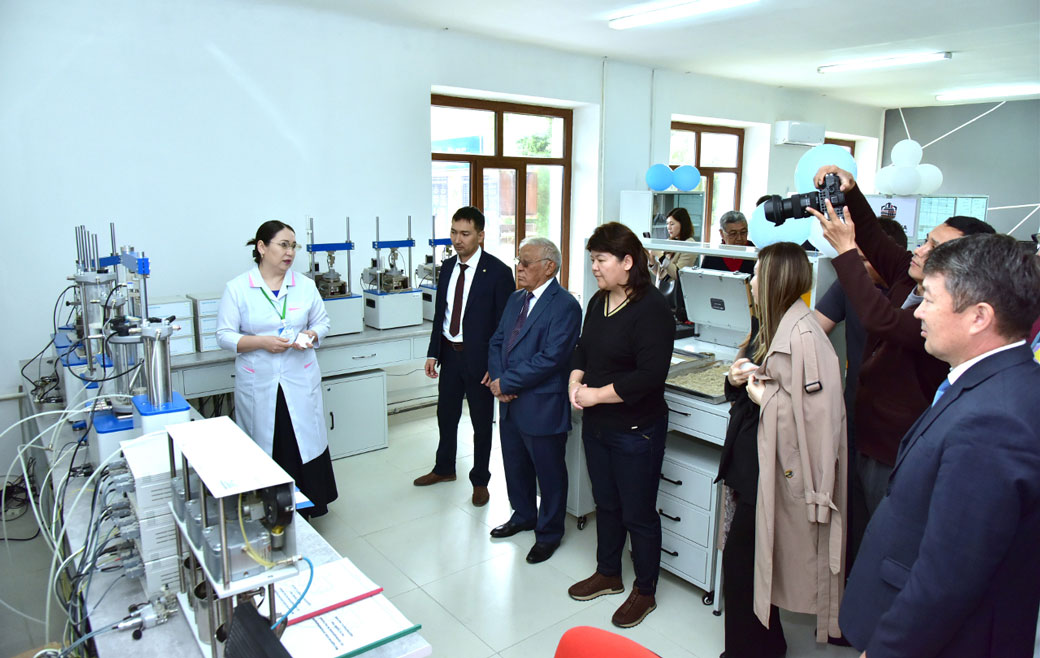
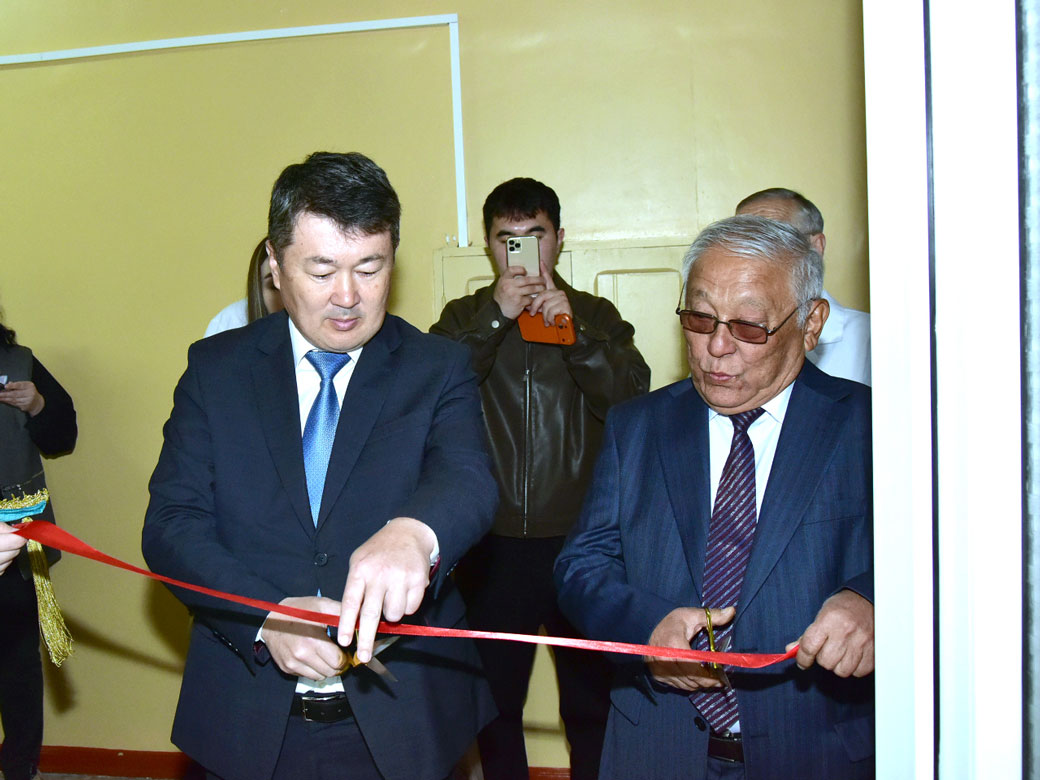
During the training, the course participants got acquainted with the material and technical base and scientific achievements of the scientific research laboratory of the engineering profile "Nanoengineering research methods named after A.S. Akhmetov". During which they became interested in the possibility of mutually beneficial use of the potential of the testing laboratory. A number of experts expressed their willingness to assist in the experimental testing of scientists' developments in production conditions. In addition, work is planned to develop a joint project for submission to the technology commercialization grant competition organized by the SHEM of the Republic of Kazakhstan. The course participants highly appreciated the work done and expressed their appreciation.

At the end of the course, the organizers presented the relevant certificates to the course participants. Following the results of the courses, an agreement on further cooperation was reached.